Helping organizations design cultures where people actually matter.
Organizational psychology practitioner. Former Head of Culture at Zappos, founding leader at Delivering Happiness. Helping leaders build cultures, leadership systems, and products rooted in human connection — and what it means to matter.

We are facing a crisis of disconnection.
Employees do not burn out simply because they work hard. They burn out when they feel invisible, disposable, disconnected, or psychologically untethered from the people around them.
As loneliness rises and traditional forms of community decline, organizations are quietly inheriting a new responsibility: helping people experience connection, significance, and meaningful human relationships in everyday work.
This is no longer simply a cultural issue.
It is a human one.
of US adults report feeling lonely on a regular basis.
employees say they feel a strong sense of connection to colleagues at work.
more likely to stay when employees feel they genuinely matter at work.
What happens when people consistently feel that they matter?
Tuesday is where the actual living happens — the meeting before the meeting, the text you almost sent, the coffee that turned into a conversation.
The Tuesday Project emerged through years of work in culture design, leadership, and organizational psychology — eventually crystallizing into a focused body of work exploring mattering, connection, and human flourishing in modern life and work.
Part research initiative, part cultural framework, part human connection movement. At its core: human flourishing is rarely created through grand gestures. It is built through small, repeated moments of acknowledgment, trust, care, and significance.
- Performative culture
- Forced fun
- Toxic positivity
- Another wellness program
Belonging vs. mattering.
Organizations have spent a decade focused on belonging. Far fewer ask whether employees feel genuinely significant within the systems they inhabit.
“Do I fit here?”
“Do I feel seen, valued, needed, and significant here?”
When people feel invisible for long enough, disengagement becomes inevitable.When people feel that they matter,organizations and the people within them thrive.
Two decades of culture, in practice.
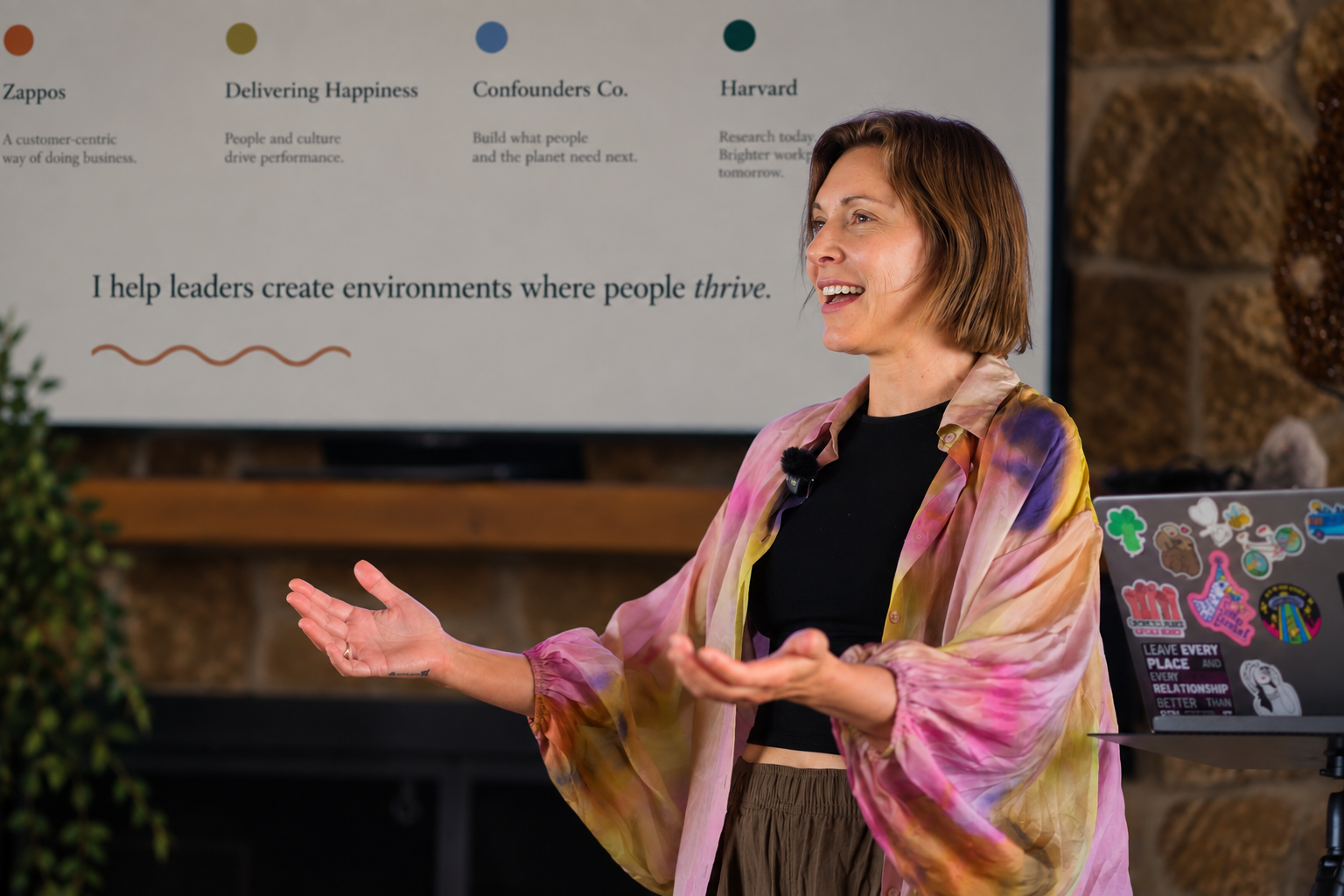
Melissa Laci is an organizational psychology practitioner, culture strategist, and executive advisor focused on the psychology of mattering, connection, and human-centered leadership.
She previously served as Head of Culture at Zappos during the early rise of modern workplace culture innovation, and later became a lead “coach-sultant” at Delivering Happiness, the culture consultancy co-founded by Tony Hsieh and Jenn Lim.
Most companies optimize for productivity and hope connection follows. The order is backwards.
Melissa is currently pursuing her Master’s from Harvard in Industrial–Organizational Psychology, with research interests in mattering within organizations, workplace loneliness, leadership, and psychological well-being.
Mattering Within Organizations.
A keynote on why mattering may be one of the most overlooked psychological needs in modern work — and how leaders can create environments where people feel psychologically significant, emotionally connected, and genuinely valued.
Drawing from organizational psychology, leadership research, and Melissa’s experience leading culture initiatives at Zappos and Delivering Happiness, the talk explores:
Ways to work together.
Culture & leadership architecture
Long-engagement work, 3 to 12 months
- →Culture diagnostics & redesign
- →Leadership team coaching
- →Mattering frameworks for HR & ops
- →Manager enablement programs
Keynotes & closed-door talks
Conferences, offsites, board sessions
- →The Mattering Economy
- →Culture as public-health infrastructure
- →The Tuesday Practice
- →Custom keynotes
Founder & product advisory
Quarterly retainer, small portfolio
- →Product & community psychology
- →Org design at early stage
- →Founder culture coaching
- →Brand-as-culture strategy
Ready to build a culture where people actually matter?
Invite Melissa to speak, advise, or collaborate on leadership, mattering, and human-centered workplace design.